
Banking logistics · Malaysia
You'll always know
who's holding it.
We move documents, parcels and bank consignments across Malaysia on fixed daily runs. Every scan, handover and signature goes into one system that we built and run ourselves, so when you ask where something has got to, there is an actual answer.
Illustrative sample events. Track a live shipment at /track.
Trusted across regulated and high-volume sectors
- Commercial banking
- Islamic banking
- Insurance
- Professional services
- Healthcare
- Fashion
- Hospitality
- Office supplies
- Industrial goods
- Toys and games
- 0
- Regional hubs
- —
- On-time delivery
- —
- Items handled monthly
- —
- Corporate clients
Across Peninsular Malaysia
Awaiting an agreed measure
Awaiting a verified figure
What we move
Four things we move.
One way of tracking them.
Whatever you send us, it gets scanned, listed on a manifest and tied to a rider by name. What changes between these four is the schedule and the handling, not how closely we keep track of it.
Find your fit
Not sure which one you need?
Most people arrive knowing their problem rather than our service names. Tell us the problem and we will point you at the right one.
Tick one or more requirements and we'll point you at the right service.
The platform
We are a courier company
that wrote its own software.
You get a portal, proof of delivery and reporting. What makes those three worth trusting is that the dispatch and rider systems underneath them are the same system, not four tools bolted together. It is why a scan at a branch counter reaches your team in seconds, and why the figure in your service review is the one our own operations team is looking at.
What you use
Your team answers its own questions
Raise collections, follow progress and pull proof of delivery without calling us. It is the same event stream our operations works from, presented as a progress path rather than a log.

The custody chain
Six things we write down between your counter and theirs.
Most couriers are fast enough. What our banking clients actually need is to be able to say who was holding something, where they were, and at what time, long after the day it happened.
- 01COLLECT
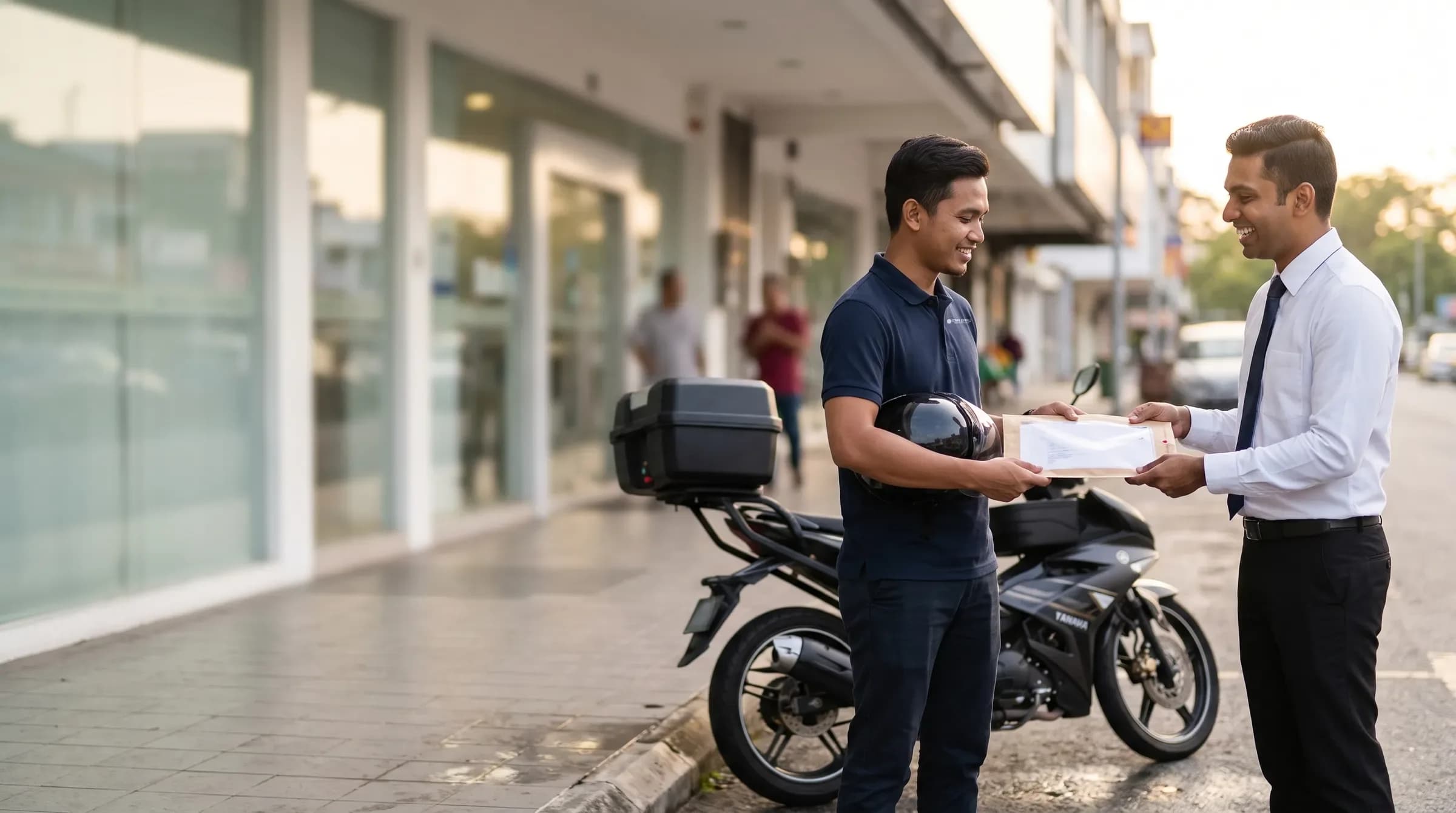
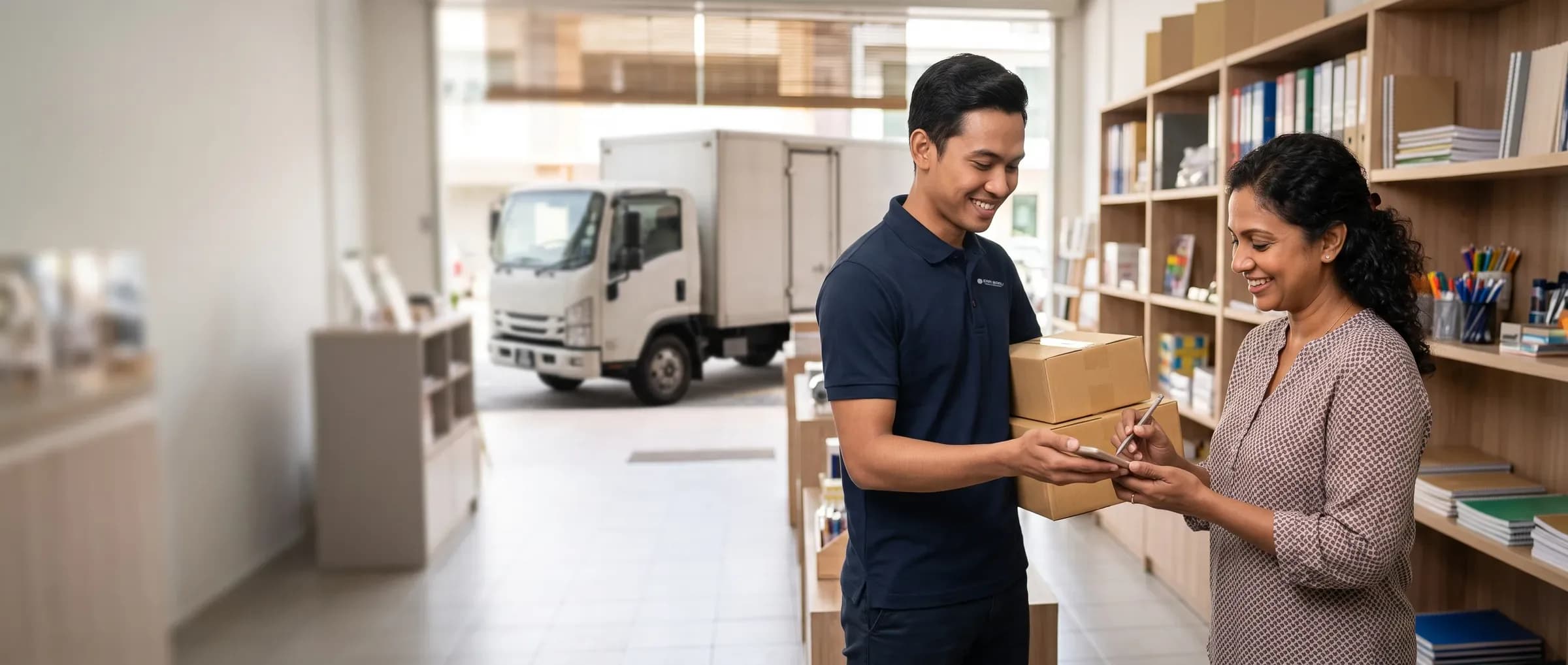
A rider collects it from your counter
Your collection happens on a fixed route at a time you can plan around. The rider scans each item in front of you, and from that moment the record has their name on it. No paper docket to lose.
- 02HANDOVER
When it changes hands, both riders confirm
Work gets passed between riders during the day. The one receiving it taps to accept before it counts, so there is never a gap where the item belongs to Era Baru in general and nobody in particular.
- 03INBOUND
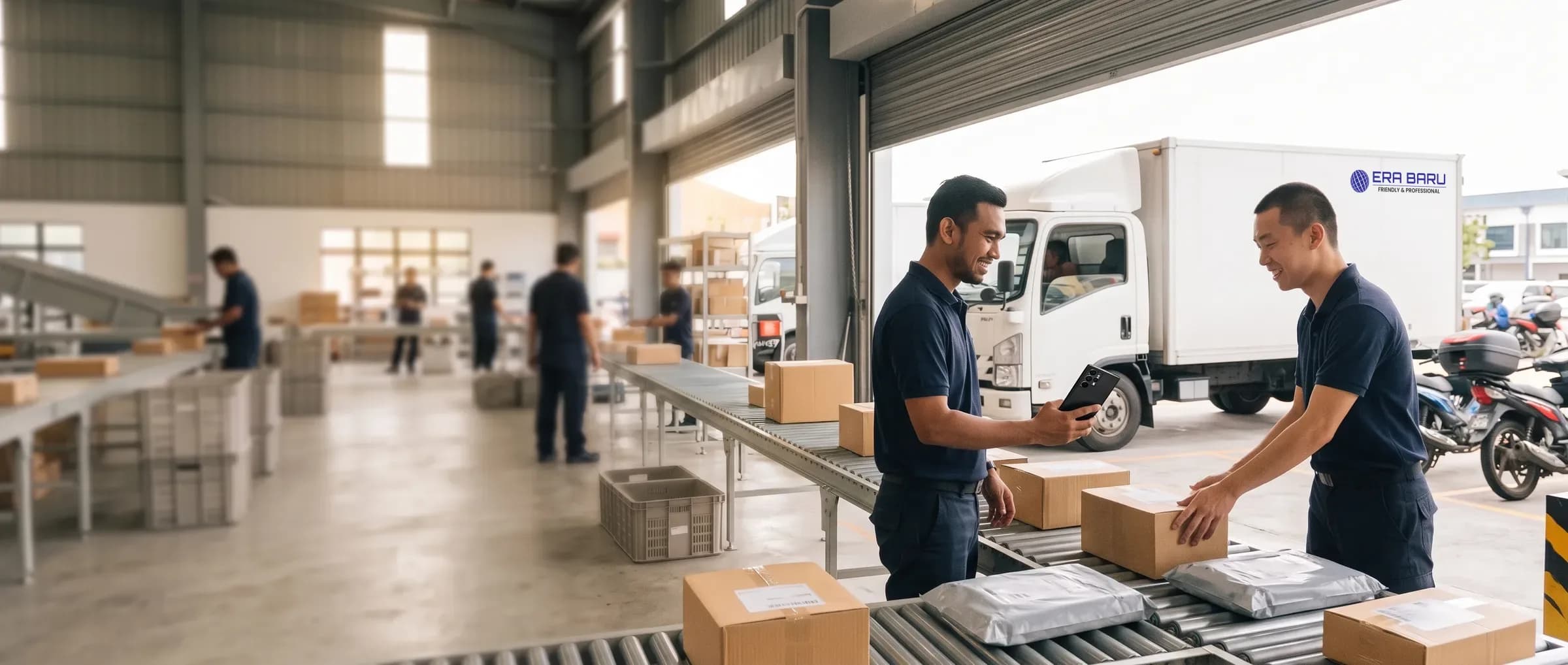
It gets scanned into the sorting centre
Everything is scanned in on arrival and then scanned onto its onward route. If something turns up that we have no outbound record for, we catch it there rather than sending it on and finding out later.
- 04DISPATCH
It goes out on a numbered manifest
Every run leaves with a manifest, and those numbers can never be reused, so two runs can never both claim the same consignment. Outstation legs move between our hubs the same way.
- 05EPOD
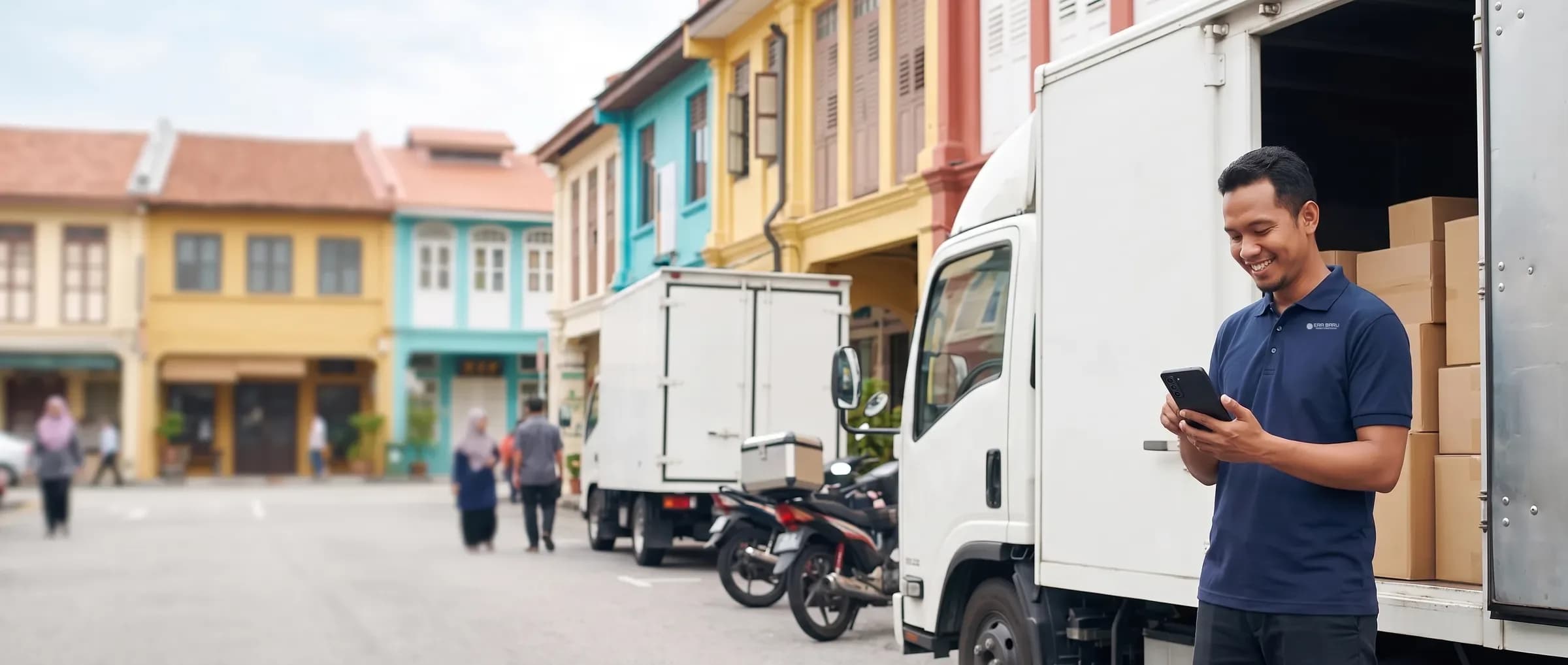
The rider scans it again at the door
If the barcode does not match what they were sent to deliver, the app will not let them close it. They take the recipient’s name and signature, and the phone stamps where it happened.
- 06AUDIT
And it is all still there months later
Every scan, handover and problem stays attached to the item. So when someone asks what happened to a particular consignment back in March, we look it up instead of asking around.

Where this matters
The bag nobody is holding is the one that goes missing.
In most courier systems, where an item is and who has it are the same field. Ours are two separate things. A consignment can say “in transit” while nobody’s name is actually against it, and that gap is where things go missing. We treat it as a fault and raise it, instead of letting it sit in a queue looking perfectly normal.
Every way of collecting an item records who took it. If that ever comes back empty, the item stops until someone sorts it out.
In practice
Two situations you have probably had before.
The 4pm problem
A branch closes at 4pm and the pouch is still sitting there. With a call-out courier, nobody finds out until someone picks up the phone. On a fixed cycle the run has already gone amber on our screen, so you hear it from us before your branch manager has to chase anyone.
The audit request
Someone asks who handled a particular consignment on a Tuesday three months ago. Every scan and handover is still sitting against that item, so the answer is something we can print for you rather than an afternoon of ringing round.
Scenarios, not case studies — these describe how the system behaves, which is checkable in a demo. Replace with named, approved client case studies when they exist; the layout takes a client name, a metric and a quote unchanged.
Industries
Built for the people with the least room for error.
Banking work set the standard we run everything else to. Our other clients get the same discipline whether they asked for it or not.
Coverage
Where we actually are.
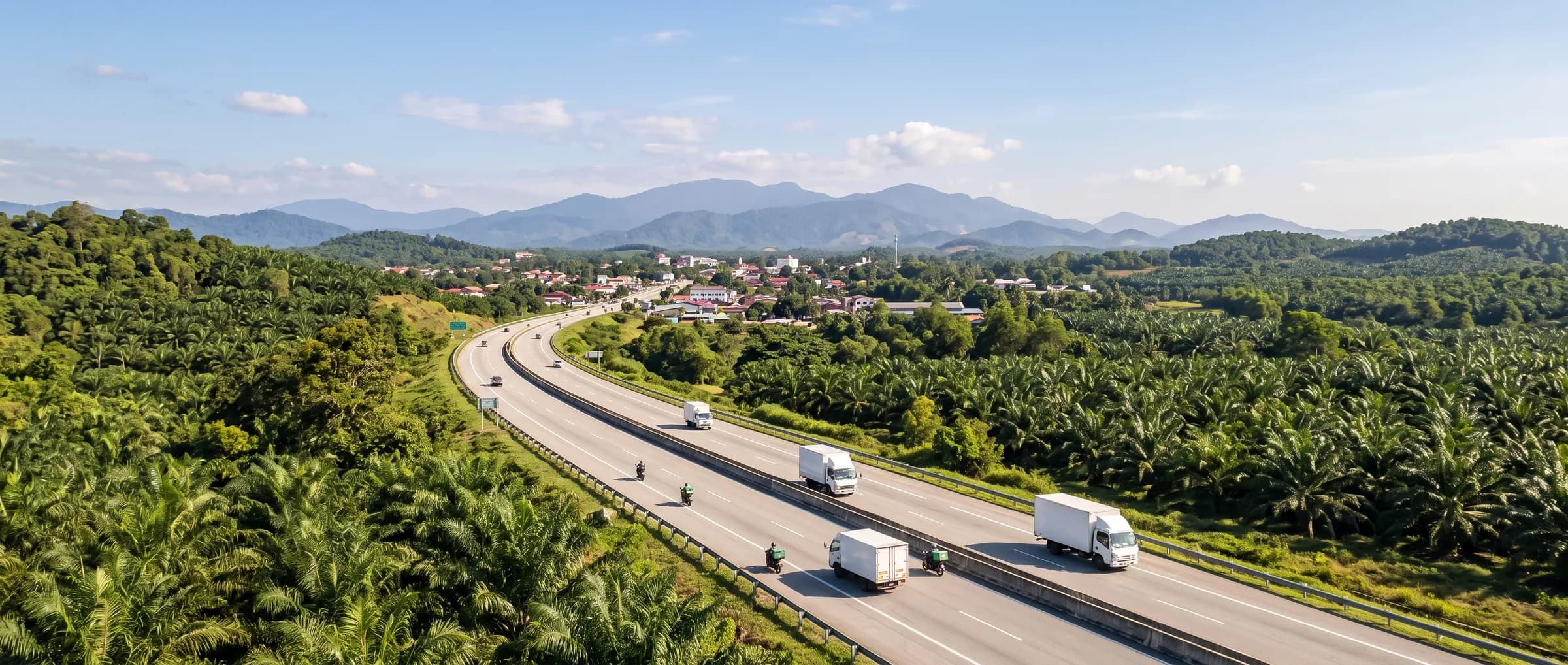
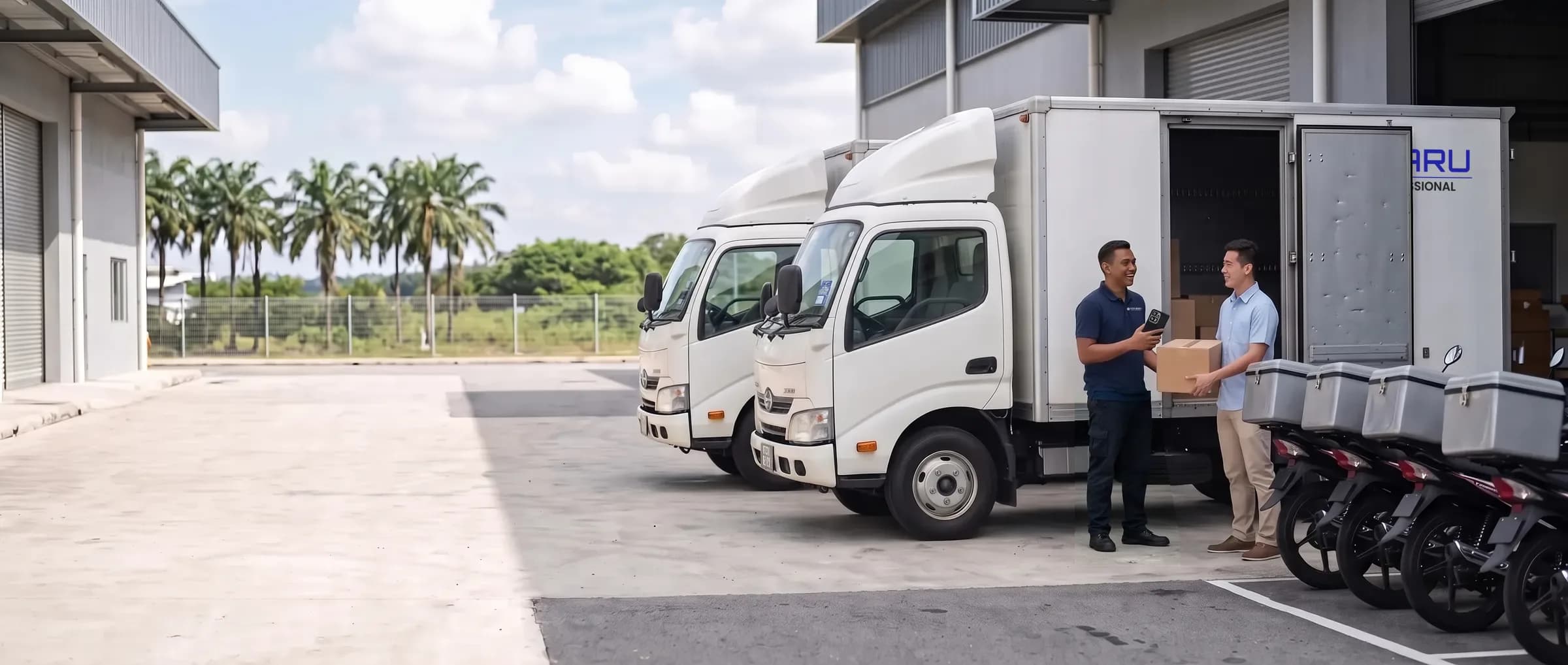
Three hubs of our own for parcels, and banking crews working further out than that. Switch between the two and pick a region to see who covers it.
Three hubs of our own, and partner legs beyond them.
- Our hub
- Our own people
- Partner legs
Our own people
Central
Kuala Lumpur · Selangor · Putrajaya
Our regional office, and the point everything routes through. Whatever we collect up north comes back through PJ, and whatever goes out leaves from here.
- Runs out of
- PJ Hub
- Service level
- Same-day and next-day
- How often we run
- Several runs a day
What you can hold us to
Four promises, and the mechanism behind each one.
A collection window, not a call-out
We agree a time with you and run a fixed route to keep it. Your team stops ringing to ask when someone is coming.
A name against your item, the whole way
Never just "with the courier". A specific rider is responsible for it from your counter to the door, and the handovers in between are accepted, not assumed.
You hear about problems from us
A missed pickup or a failed attempt reaches you the same day, with a time and a reason on it. You should not be the one who notices.
Proof that is still there later
The signature, the recipient and the time stay attached to the item. Ask us about one from three months ago and we will pull it up.
Public tracking
Let your customers check for themselves.
Anyone with the order number can look it up here, without an account and without ringing your service desk. They see the stages and the status. Addresses, contacts and proof of delivery stay behind your portal login.
Track a shipment
Enter the number printed on your delivery order.
Questions
Things people usually ask first.
How is this different from a standard courier account?
A courier account gives you a pickup scan and a delivery scan. We run scheduled routes, record who is holding each item the whole way through, give your team a portal to log into, and keep the history per item so you can still answer a question about it months later.
Do we need to install anything?
No. The portal runs in a browser. Our riders use our own app on their phones, so there’s nothing for your side to set up beyond a login for whoever needs to see what’s going on.
Can our customers track their own deliveries?
Yes. Anyone with the order number can check progress on this site without an account. They see the stages and the status, and nothing else. Addresses, contacts and proof of delivery stay behind your portal login.
What happens when a delivery fails?
The rider records why, and that goes against the item with a time on it. You can then tell us to hold it, try again, or return it to you under its own tracking number. What doesn’t happen is silence.
How do you handle confidential documents?
Each item is scanned and manifested on its own, a named rider is responsible for it throughout, and the rider can’t confirm delivery unless the barcode matches and they’ve entered who received it. What you can see in the portal is scoped to your own organisation.
Can we get performance reporting for our service reviews?
Yes. On-time and first-attempt rates by route and period, pulled from the same scans our operations team works from. Nobody compiles them by hand, so the number in your review is the number we see.
Tell us what you need moved.
Tell us your volumes, where you need collecting from and where it has to go. We will come back with a schedule, a service level and a price.